
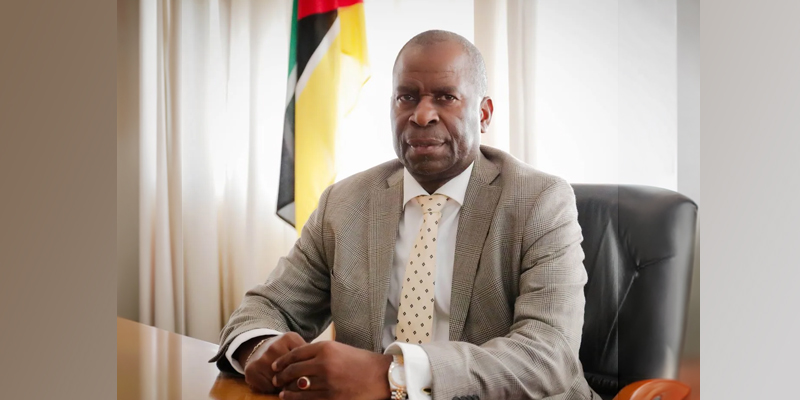
20 May Interview with H.E. Estevão Pale, Minister of Mineral Resources and Energy, Mozambique
You have expressed optimism about the resumption of the Mozambique LNG project, which includes strong Japanese participation through Mitsui and other partners. What would this resumption mean for the country and what concrete milestones need to be achieved before construction can fully resume?
The resumption of the projects, especially the lifting of the force majeure on the Area 1 projects, means that the situation on the ground has improved substantially. The conditions are now in place for the LNG projects to move forward as they were planned at the time the force majeure was declared. This applies both in terms of security and the overall situation on the ground. There are objective conditions for the projects to proceed safely and stably. And for investors to develop all projects currently prepared and planned for this purpose.
The priority is to move these projects into a remobilization phase. Not only financing, but also the workforce. So that operational conditions are in place to proceed with the planned construction immediately. The goal is for the projects to be in production by 2029. We have the resources. We have the wealth in the subsoil. But this wealth needs to be leveraged to benefit the national and international economies.
How does your Ministry coordinate with the security and social sectors to ensure that energy investments translate into concrete benefits for the affected communities?
In parallel with the efforts by security and military authorities to ensure a safe and stable environment in the region, there has been a gradual normalization of the population’s daily activities. Services and goods are returning. People can move naturally in conditions of peace and physical security. We have also been working with operators to create social conditions that enable the population to benefit and to see that these projects deliver advantages to local communities. This includes the construction of social infrastructure, support programs, employment, income-generation opportunities and professional training. It also involves small and medium-sized businesses, enabling them to supply goods and services to operators in the region. This helps create stability. It creates more favorable conditions for the population to support the project and perceive personal benefits.
Mozambique is moving forward with the Mphanda Nkuwa hydroelectric project and other clean-energy investments. How do you see the balance between LNG exports and renewables in achieving universal access to electricity and regional energy security?
Mozambique has significant potential, not only in natural gas but also in renewable energy. We believe these projects should be combined to improve living conditions for the population and ensure the country becomes a regional hub for energy supply. This means not only achieving universal access to electricity within the country, but also supplying energy to neighboring countries, so this combination of energy sources, LNG and renewables, is essential. We have abundant sun and abundant water.
At times, water levels are affected by drought, so we need to integrate all available domestic sources to ensure Mozambique’s energy security. This is essential for industrial development, export growth and the creation of added value in local production. Without energy, no matter how much goodwill there is, it becomes very difficult to develop industrial projects and increase the value of our exports.
We believe this combination is critical and the Mphanda Nkuwa project is part of this approach. It will add about 1,500 megawatts along the Zambezi Valley, increasing the current production of the Cahora Bassa hydropower plant. This will provide an additional source of electricity for the country and will certainly support the industrialization of Mozambique.
The Government has announced reforms to promote public tenders for critical minerals and to increase local benefits from mining. What is your strategy to move from the export of raw resources to the creation of value chains in areas such as graphite, heavy sands and battery minerals?
Mozambique has a wide range of mineral resources. Many of them are still to be discovered, while others have already been identified but are being exported in their primary form. It is necessary to find partnerships to develop these resources with a view to adding value.
Currently, we are reviewing the legislation. This includes mining legislation, petroleum legislation and local content regulations. The aim is to ensure that we can attract more investment into the mineral resources and energy sectors, so that potential partners can develop projects with added value in production.
What has been happening is that many of the operations taking place in the country, particularly in mineral production, are mainly at the artisanal or semi-industrial level. What we want is for this sector to become more formalized, so that we can bring in large investors who can ensure that these resources are extracted in an environmentally sound way and on an industrial scale. This would bring benefits not only to the country but also to the communities around the areas where these minerals are found. That is essentially our position.
In practical terms, in which segments — upstream, midstream, or downstream — would you most like to see Japanese technology and investment deepen their presence in Mozambique’s energy sector over the next decade?
We would like to see Japanese investment in all areas, with particular attention to midstream and downstream. We know that Japan and Japanese companies have great potential. They have excellence in engineering, precision work and the management of large industrial projects, with high standards of quality and competence. These are companies with strong technical and financial capacity. We can gain a great deal from partnerships with Japanese companies, which have already shown and continue to show strong technical and financial capacity in this field.
Mitsui is in Area 1, but there are many others providing services as subcontractors, not only in Area 1 but also in Area 4. They can bring technology and form partnerships with Mozambican companies. They can transfer skills to Mozambican companies, including small and medium-sized enterprises. They can also train Mozambican staff and transfer technology and know-how to Mozambicans.
Which local content policies and training programs do you consider most important to ensure that Mozambican workers and companies capture a larger share of the opportunities created by LNG and other energy projects?
Technical and vocational training is very important so that our young people can receive the basic training needed to work on these large projects. With intermediate training, they can learn to operate production technologies and gradually replace the foreign workforce that is present not only during the construction phase, but also later during the operational phase of these LNG projects and others. This takes time.
We have many capable young people, but many of them have never been exposed to this industry. It is a new industry. Many have academic training but do not yet have the technical or technological exposure needed to enter an operation without first going through these stages of induction and training. We believe these projects will allow more Mozambicans, more young people, to take part in these industries and contribute, while also benefiting from the opportunities they create.
Are there any collaboration programs for young people to go to Japan and exchange know-how?
We have a joint program with Japan through the Japan International Cooperation Agency. Every year, we send some technicians for training in Japan. Of course, these are mostly technical and scientific programs, but we would like to have more.
We are also in the process of setting up technology centers here in the country, so that more people can be exposed to these opportunities. The more people who can participate in technical training programs, the better.
What would be your final message to the readers of this report?
Mozambique is open. We want cooperation with Japanese companies in all areas, not only in oil and gas, but also in other industries and other sectors of the Mozambican economy.
Japanese companies are welcome to cooperate with Mozambique in all sectors. In the areas I oversee, oil and gas and mining, we are open and would sincerely like to see much greater Japanese participation in projects in the energy sector and in the geological and mining sector. Also, in other sectors of the economy and in services that support LNG projects and related developments.